It’s still dark when we leave the dock. The air smells like salt and mud and something alive. The marsh is waking up. By the time the sun breaks the tree line, we’re already running through the backwater, the skiff cutting a channel through grass flats that most people driving past on the highway have no idea exist. Forty-five minutes from the French Quarter and you’re in a different world entirely.
Inshore fishing is what I do. It’s what the Louisiana marsh around Delacroix was made for, with its shallow water, structure, fish that are close enough to see and smart enough to make you work for them. If you’ve been thinking about a charter and you’re not sure whether inshore is the right fit, this is the article that answers that question. For the full breakdown of what fishing out of Saint Bernard Parish looks like, see the New Orleans fishing charter guide.
What Inshore Fishing Actually Means
Inshore means shallow water, backwater marshes, grass flats, tidal creeks, points, and cuts that run anywhere from a foot to maybe eight feet deep. No offshore boat required, no open-water crossing, no seasickness. You’re fishing structure and current while reading the water rather than just dropping a line over deep water and waiting.
The Louisiana marsh around Delacroix is one of the most productive inshore fisheries in the country. It’s a complex of tidal creeks, ponds, and grass flats that hold fish year-round. What makes it different from most inshore fishing is the variety, which include redfish, speckled trout, flounder, sheepshead, black drum. Here, you’ll be sight-fishing as much as blind-fishing. You’re looking for tails, wakes, nervous water. It’s hunting as much as fishing.
What You’ll Catch
Redfish
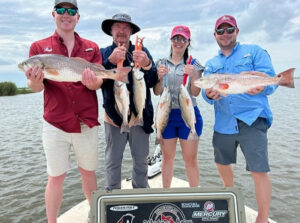
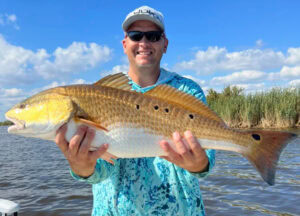
Redfish are what most people come for and what most people remember. Slot-size reds run 16 to 27 inches and are legal keepers with firm white meat that holds up well on the grill or in a cast iron. In the fall, bull reds push 30, 40, sometimes 50 inches and school up in the passes in numbers that most people don’t believe until they see it. Redfish tail in shallow water, which means you can watch them before you cast. There’s nothing quite like watching a fish that size working a flat ten feet in front of you.
Speckled Trout
Speckled trout are the most technical fish in the marsh, held at specific depths and structures, and their window for feeding can be narrow. When you find them stacked up in the right spot at the right tide, the bite is fast and the fishing is as good as anything I know. Spring and fall are the strongest seasons, but there’s a trout bite somewhere in this marsh most of the year.
Flounder
Flounder are ambush predators: they sit on the bottom near structure and wait. They’re not the flashiest catch but they’re excellent table fare, maybe the best eating fish in the marsh. Fall flounder runs are strong in southeast Louisiana as fish stage before moving to deeper water for winter.
Black Drum and Sheepshead
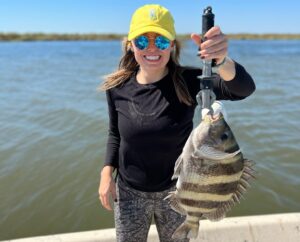
Black drum and sheepshead are structure fish, and you’ll find them around oyster beds, dock pilings, and hard bottom. They’re not the primary target on most trips but they show up regularly and they fight hard for their size. Sheepshead are a favorite for people who want something different as they’re notoriously difficult to hook and satisfying when you do it right.
What the Day Looks Like
We launch from 626 Florissant Hwy in Saint Bernard Parish, about 45 minutes from downtown New Orleans. I’ll send you directions when you book, and it’s a straightforward drive.
Our trip will run about six hours on the water. I handle everything from rods, reels, bait, tackle, ice, even fish cleaning at the end. You bring food, drinks, and sunscreen. We push off at first light when we can, because that’s when the fish are most active and the marsh is at its best.
I fish the areas that are producing. That changes with the season, the tides, and what I’ve seen on the days before your trip. I don’t have a predetermined route; we’ll go where the fish are. If one spot isn’t producing, we move. The goal is to put you on fish, not to show you scenery.
Who Inshore Fishing Is Right For
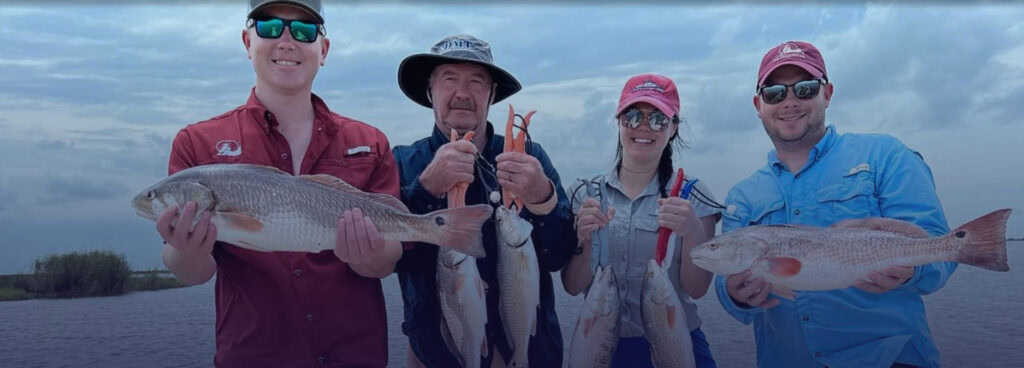
First-timers do well on inshore trips. There’s no complicated technique required for most of the fishing we do; I’ll show you what you need to know on the water, and most people catch fish within the first hour. If you’ve never held a rod before, that’s fine. If you’ve been fishing your whole life, you’ll find plenty to challenge you in how this marsh fishes.
Inshore is well-suited for small groups: couples, a parent and kid, two or three friends. The skiff works best with two to three anglers fishing at once, which keeps lines from crossing and gives everyone room to work. It’s an active day, not a passive one. You’re moving, watching the water, casting to specific targets. People who want to sit back and relax while a line soaks typically enjoy it more than they expected. People who want to engage with what’s happening love it.
Inshore vs. Other Types of Fishing
The main distinction worth understanding is between inshore and offshore. Offshore fishing takes place in open water, typically targeting different species on larger boats, with the associated sea conditions that come with that. It’s a different experience and a different skill set. Inshore fishing in a flat-bottomed skiff on tidal marsh is more intimate – smaller water, closer fish, more visual.
What I’ve found with most people who fish with me for the first time is that they didn’t fully understand what inshore meant until they were in the marsh. Then it makes sense immediately. You’re not on a big boat anchored over deep water. You’re running the grass flats, reading current and structure, and the fish are right there.
Best Time of Year for Inshore Fishing Near New Orleans
There’s a bite in this marsh every month of the year, however, the character of fishing changes. Fall is my favorite season, when the bull reds are running and the trout are stacked, and the weather has broken. Spring is strong, particularly for speckled trout. Summer fishing starts early, before the heat builds, and the redfish are reliable all season. Winter slows down but doesn’t stop, on a mild day between cold fronts, the fishing can be excellent.
The honest answer is to come when you can. Book a trip around your travel schedule and I’ll fish what’s there. The marsh produces year-round.
Summary
Inshore fishing near New Orleans means shallow-water marsh fishing in the Delacroix area of Saint Bernard Parish, 45 minutes from downtown, no offshore boat required, targeting redfish, speckled trout, flounder, and black drum in one of the most productive inshore fisheries in the country. Everything is included: rods, reels, bait, tackle, ice, and fish cleaning. It’s the right trip for first-timers, experienced anglers, couples, and small groups who want an active day on the water. To see full trip options and current pricing, visit the inshore fishing charters page. To book, reach out directly.
Frequently Asked Questions
Do I need fishing experience for an inshore charter?
No. I’ll show you what you need to know on the water. Most first-timers catch fish within the first hour. If you’ve been fishing your whole life, the marsh will still give you plenty to work with, there’s technique involved in reading water and presenting bait to specific fish. Experience helps but it’s not required.
What if we don’t catch anything?
It happens occasionally. Fishing is fishing, no one can guarantee a catch. What I can tell you is that I’ve been fishing this marsh since 2015 and I know where the fish are at different times of year, tides, and conditions. I move when a spot isn’t producing rather than staying put and hoping. Most trips produce fish. When they don’t, it’s usually weather or conditions, not lack of effort.
How many people can fish at once?
The skiff fishes best with two to three anglers at a time. That keeps lines clear and gives everyone room to cast and work their fish properly. If you have a larger group, reach out directly and we can talk through options.
Is inshore fishing good for kids?
Yes, inshore fishing is one of the better trip formats for kids because the action is visual and relatively fast. Watching a redfish tail and then casting to it is the kind of thing that turns kids into fishing people.
When is the best time of year to fish inshore near New Orleans?
Fall is my favorite: September through November, when the bull reds are running and the trout are stacked and the weather has broken since summer. Spring is strong for speckled trout. Redfish are reliable year-round. There’s no bad month to fish the Delacroix marsh, but if you have flexibility, fall gives you the most variety and typically the best conditions.
If this sounds like the right trip, the next step is simple: reach out, pick a date, and we’ll get it on the calendar. Call or text 504-265-3405, or use the contact page to send a message. I’ll get back to you the same day.